Causes & Prevention
Understanding the causes of cervical cancer and taking preventive measures can significantly reduce your risk. Learn about risk factors and proactive steps you can take
Human Papillomavirus Prevention (HPV)
What is HPV?
- A group of over 200 viruses
- Some types cause warts; others can lead to cancers
- Spread through skin-to-skin contact, especially sexual contact
- Many infections resolve on their own, but some persist and can cause health issues
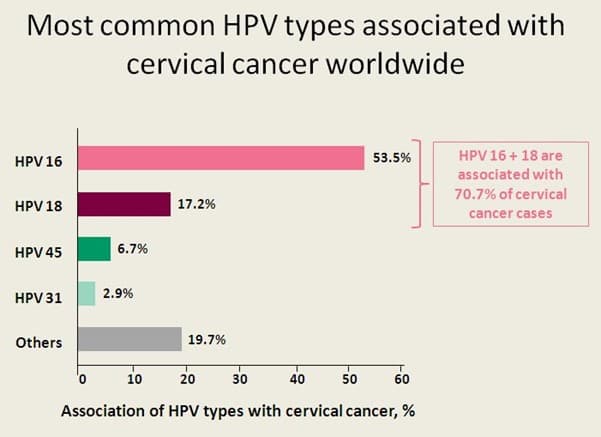
Common types associated with Cervical Cancer
There are plenty of evidences that showed Human Papilloma Virus (HPV) is the sole agent that cause cervical cancer. HPV infection is the most common sexually transmitted disease in the world.
The HPV vaccine
The National Department of Health (South Africa) is offering a free HPV vaccination drive to girls aged 9 and above in public, special, private, and independent schools. This drive aims to protect against cervical cancer, a disease that can be prevented by the HPV vaccine. The vaccination is part of the Integrated School Health Programme and is administered by healthcare workers.
National HPV Vaccination — 3 February to 28 March
Protect Her Future, Prevent Cervical Cancer!
Where
The HPV vaccine is administered in schools to Grade 5–7 girls across the country. Girls from public, special, private and independent schools are all eligible for vaccination.
Who
Trained teams of healthcare workers visit schools to vaccinate Grade 5–7 girls who have signed consent forms. Girls aged 12 and older may also provide their own assent to be vaccinated.
A mother's relief that her daughter will get HPV vaccine
Causes & Risk Factors
Learn about the primary causes and risk factors associated with cervical cancer development.
Smoking
Weak immunity
Multiple sexual partners
Early or multiple pregnancies
Prevention Strategies
Discover effective ways to reduce your risk of developing cervical cancer.
Get Vaccinated
Protect yourself early — HPV vaccines are safe and available for girls aged 9 to 15 years, free of charge.
Get Screened
Regular screening is crucial. Choose an HPV DNA test, PAP smear, or VIA to detect any risks early.
Get Treated
If your screening results indicate abnormalities, follow up immediately for expert guidance and treatment.
Additional Resources
In South Africa, resources for guiding women about cervical cancer include the Cancer Association of South Africa (CANSA), the Marie Stopes South Africa, the Cancer Alliance and the National Department of Health’s Cervical Cancer Prevention and Control Policy. These resources offer information on prevention, screening, diagnosis, treatment, and support for both women and their families.